The «Fatty fish and winter depression» investigation comprises two parts. This article is the second part. Read the first part first: Fatty fish and winter depression (I) – An Icelandic paradox.
The Icelandic paradox, if indeed there is one, might reside in good dietary habits. Icelanders consume a lot of fish – 85.39kg per capita in 2022 vs. 22.07kg per capita in the USA.
Seasonal affective disorder seems to equate to a circadian mismatch – a mismatch between circadian biology, marked by the evening melatonin rise, and sleep/wake cycles. Do omega-3s from fatty fish possess the power to reset our internal clocks?
In this second episode, we first review how clocks work at a molecular level. We then study more closely those clocks at work in brain function. And finally, we will be able to understand the molecular effect of omega‑3 fatty acids on clock genes and, ultimately, on cognition and mood.
The molecular clockwork
Circadian clocks all seem to be governed by the same basic principles; their period, amplitude, and phase are determined by the interplay of specific genes (clock genes) and their protein products, along feedback loops that delineate daily rhythms.
Recall the protein factory. Proteins are large biomolecules assembled from amino acids based on information encoded in the DNA of genes. Genes are first transcribed into messenger RNA (mRNA). mRNA then serves as a template in the synthesis of proteins, or translation. Some specific proteins control protein synthesis; so-called transcription factors bind to specific DNA sequences to control transcription. Essentially, they upregulate or downregulate genes – they turn them on or off.
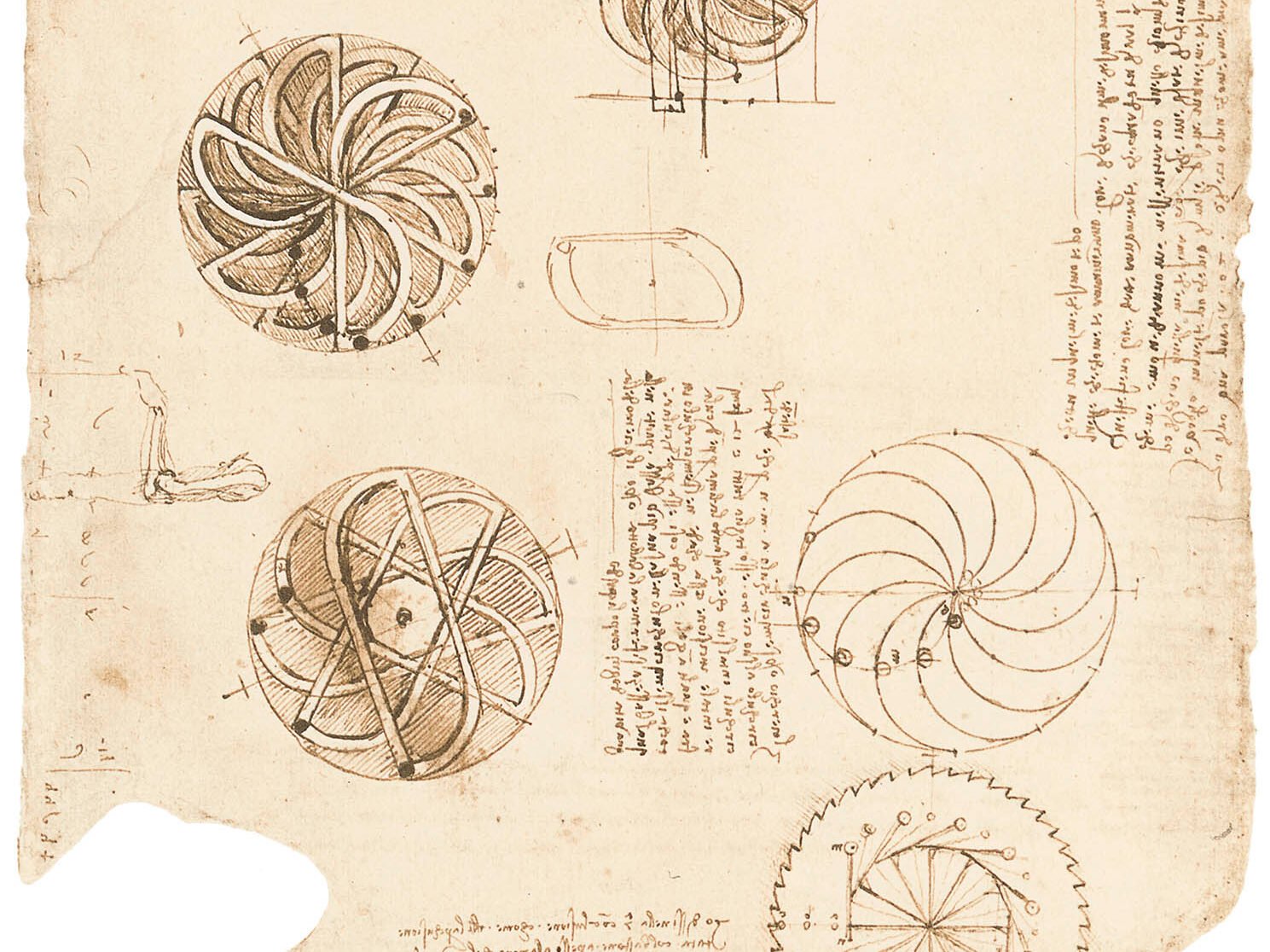
Leonardo Da Vinci, Study for the design of perpetual wheel, 1493, in Codex Atlanticus, f. 1062 r, Veneranda Biblioteca Ambrosiana, Milan
A crucial transcriptional/translational feedback loop (TTFL) defining circadian rhythms features a duo of transcription factors: the aptly named CLOCK, and BMAL1. This duo performs a tireless circadian choreography.
During the day, the BMAL1:CLOCK complex translocates to the cell’s nucleus, where it promotes the expression of Period (PER1, PER2, PER3) and Cryptochrome (CRY1, CRY2) genes. PER and CRY proteins gradually accumulate in the cytoplasm. After several hours, they translocate back into the nucleus, where they inhibit the BMAL1:CLOCK complex: PER and CRY protein synthesis subsides, their concentration drops, and by the end of the night BMAL1:CLOCK is free to promote transcription anew: the clock restarts. Some secondary TTFLs stabilize the core TTFL, notably including transcriptional repressors (REV-ERB α/β) or promoters (ROR α/β) of BMAL1 expression. (Checa-Ros, 2022)
We have now introduced the principal molecular protagonists of circadian clocks. What, then, of the molecular clocks driving brain function?
Brain clocks
The aforementioned studies documenting the success of light therapy (the preponderant time cue) and melatonin administration (a key circadian marker) in treating seasonal depression confirm that the circadian system is deeply intertwined with brain function. Animal models deepen our understanding. A wealth of studies shows the interconnection between the biological clock and pathways implicated in memory consolidation, neurogenesis, and ultimately, the onset of neurological diseases. (Checa-Ros, 2022)
Studies in the rich literature review by Checa-Ros notably demonstrates: In BMAL1-deficient mice, the impairment of «contextual fear and spatial memory» via an clearly identified molecular pathway; in mice with some BMAL1 deficit in the hippocampus, «disruptions in memory retrieval […] related to dysregulation in dopamine […] receptors»; in mice with PER2 mutations, «reductions in hippocampal neuronal plasticity» and «decreased activation of the transcription factor CREB […] involved in memory formation by reinforcing glutamatergic synapses». Tweak the clock genes and proteins, and mice lose their minds.
BMAL1 deletion increases epilepsy frequency or excitability in mice, and a molecular causal chain has been identified. When artificially inducing seizures in rodents, the «anticonvulsant effects of melatonin and adrenocorticotropic hormone (ACTH)» are linked to «significantly increased expressions of BMAL1, CLOCK, PER1, PER2, CRY1, and CRY2.» Furthermore, BMAL1 deficiency in mice seems to exacerbate the «deposit of β‑amyloid plaques in the hippocampus» that is symptomatic of Alzheimer’s disease. Tweak the clock genes and proteins, and mice fall neurologically ill. (Checa-Ros, 2022)
Omega-3s and circadian clocks
Literature amply attests to the critical role of omega‑3 fatty acids in brain function – cognition and mood. This in itself points to them as a potential key to our «Icelandic mystery» – and to fatty fish as an adjuvant against Seasonal Affective Disorder.
Yet, we aim higher; evidence is accumulating that omega‑3 fatty acids affect neurological processes via circadian pathways and, at the molecular level, via clock genes.
First, dietary fatty acids appear to interact with the biological clock. Second, omega‑3 fatty acids seem to regulate melatonin production – a key circadian marker. Third, at least one study directly supports an effect of omega‑3 fatty acids on brain function via clock genes. And finally, several studies support an anti-inflammatory effect of omega‑3 fatty acids via clock genes – neuroinflammation being a process involved in cognitive and mood impairment as well as neurodegenerative diseases such as Alzheimer’s.
This all makes fatty acids strong candidates for being «non-photic zeitgebers and circadian clock synchronizers,» as the study by Checa-Ros phrases it. (Checa-Ros, 2022) Now that we have acquainted ourselves with the biomolecular mechanisms of circadian clocks, let’s focus on the evidence for the interaction between omega‑3 fatty acids and clock genes.
Melatonin-Omega‑3 Interplay
We know the clear interplay of circadian clocks with brain function pathways. Just the same way, we know their interplay with innate and adaptive immunity pathways, as well as the development of chronic inflammatory diseases. For instance, «patients suffering from [rheumatoid arthritis] were reported to reach melatonin peak concentrations around 2 h earlier than healthy controls»; and inflammatory decreases in rodents with induced arthritis point to an «inhibitory effect of CRY1 and CRY2 on inflammation within fibroblast-like synoviocytes.»
And several studies succeed in connecting the anti-inflammatory changes induced by an omega‑3 fatty acid-enriched diet with modifications in BMAL1, REV-ERBα, and RORα expression – where, as we recall, the nuclear receptors REV-ERBα/β and RORα/β act as transcriptional repressors and promoters of BMAL1 expression, respectively. (Checa-Ros, 2022; Lavialle, 2008)
Since there is a strong (neuro)inflammatory component in brain function deficiencies and impairments, clock genes become good candidates for mediating the regulatory and protective effects of omega-3s on memory, cognition, mood, and chronic brain diseases.
But there is also direct evidence that omega-3s work on the brain via clock regulation. Demonstratively, a large cohort study in type 2 diabetic patients finds that omega‑3 consumption dampens sleep impairment via an upregulation of the clock genes CLOCK, BMAL2, PER2, and BMAL1-promoting RORα, leading to the restoration of hypothalamic clock oscillations. «Receptor-ligand molecular docking simulation unveiled a potent affinity between the active pocket of RORα and DHA/EPA [omega‑3]. Further RORα-based loss-of-function assay further supported a pivotal role of RORα in [omega-]3 PUFA-induced master regulation of molecule clock oscillations.» (Zhuang, 2025)
Omega‑3 a dietary zeitgeber?
A circadian time cue has the power to reset the clock. The first light of dawn starts a new cycle. To what extent might omega-3s possess a similar reset capacity?
As we have seen, there is strong evidence for an interplay between omega‑3 fatty acids and clock genes, whose daily ballet represents the elementary circadian pacemaker. In this regard, we might already call them, in a sense, molecular zeitgebers. But are they capable of acting on the entire biological timing system, as a photic signal does? Their demonstrated effect on melatonin production is perhaps the most eloquent argument for such a hypothesis.
Melatonin-omega‑3 interplay
Significantly, omega‑3 deficiency in rodents drastically dampens the rhythm of melatonin release at night, down 52%. There is sound evidence of the whole causal chain at work. Cell membrane phospholipids become particularly deficient in DHA in the pineal gland, the primary factory for circulating melatonin. Thereby, their AA:DHA ratio becomes about 5 times higher than in the control group. (DHA and AA are types of omega‑3 and omega‑6 fatty acids, respectively.) A higher AA content in the pineal gland is known to correlate with a decrease in endogenous pineal 12-HETE, an acid produced by the oxygenation of non-esterified (free-floating) AA, while 12-HETE is known to stimulate melatonin production. (Lavialle, 2008)
From there, what kind of zeitgeber is melatonin? Melatonin, «the darkness hormone», is no simple messenger relaying information from a master light-sensitive SCN pacemaker. The effect, it seems, goes both ways. Alterations in melatonin rhythms also «enhance circadian sensitivity to light synchronizers and reduce the resistance of the timing system to photoperiod variations.» (Lavialle, 2008) Besides, melatonin production is not linearly triggered by darkness: darkness simply uninhibits its production. Its synthesis, as we have just seen, is controlled by much more than light – e.g., its cell membrane lipid composition. Ultimately, the correction of circadian phase-shift delays through melatonin administration makes it the same potential «external time cue» and «photobiotic» as light.
Ultimately, omega-3s undoubtedly deserve the rank of a circadian system zeitgeber – their regulation of and close interplay with the non-photic zeitgeber melatonin speak for it.
Fatty fish against winter depression
We must conclude on the potential of fatty fish to reset the clocks in winter.
Seasonal Affective Disorder is essentially, as we have seen earlier, a circadian mismatch. A delay of the circadian clocks with respect to the sleep/wake cycle. Omega-3s can be said to act as a time cue for circadian rhythms along multiple pathways. They promote the pineal night secretion of melatonin, a central zeitgeber of the circadian system. There is sound evidence that molecular (gene) clock regulation mediates their anti-inflammatory and protective effects on brain functions. Those include mood and sleep – two key variables of winter depression.
In light of these investigations, the synchrony of biological clocks at all levels of physiology seems pivotal to good health, and their mismatch an important contributor in chronic disease. Eating adequate amounts of fatty fish seems like a simple and savory way to oil the clockwork.
References
Checa-Ros, A., & D’Marco, L. (2022). Role of omega‑3 fatty acids as non-photic zeitgebers and circadian clock synchronizers. International Journal of Molecular Sciences, 23(20), 12162. https://doi.org/10.3390/ijms232012162
Lavialle, M.., Champeil-Potokar, G., Alessandri, J. M., Balasse, L., Guesnet, P., Papillon, C., Pévet, P., Vancassel, S., Vivien-Roels, B., &. Denis, I. (2008). An (n‑3) polyunsaturated fatty acid-deficient diet disturbs daily locomotor activity, melatonin rhythm, and striatal dopamine in Syrian hamsters. The Journal of Nutrition, 138(9), 1719–1724. https://doi.org/10.1093/jn/138.9.1719
Zhuang, P., Wu, Y., Yao, J., Wang, T., Zhang, Y., & Jia, J. (2025). Marine n‑3 polyunsaturated fatty acids slow sleep impairment progression by regulating central circadian rhythms in type 2 diabetes. Cell Reports Medicine, 6(5), 102128. https://doi.org/10.1016/j.xcrm.2025.102128